THE ESKI132 INCIDENT
THE GREAT DELEGATION
In the beginning there was a laptop, an unfinished website, one human with a dangerous amount of confidence, and four cats who had not agreed to participate in anything. The human had opened the project with every intention of working. This intention survived for several minutes. Then the human looked at the empty sections, the unfinished styling, the collection of decisions still waiting to be made, and discovered an ancient engineering principle: difficult work becomes much easier when assigned to somebody who cannot object in a language recognized by management.
Miso was selected first. This was not because Miso had experience, qualifications, or interest. Miso was simply sitting closest to the laptop. The human moved the machine toward Miso and announced a promotion. Miso responded by placing one paw on the keyboard and producing a sequence of characters that destroyed half a sentence. The human interpreted this as enthusiasm. It was the first of many interpretation errors.
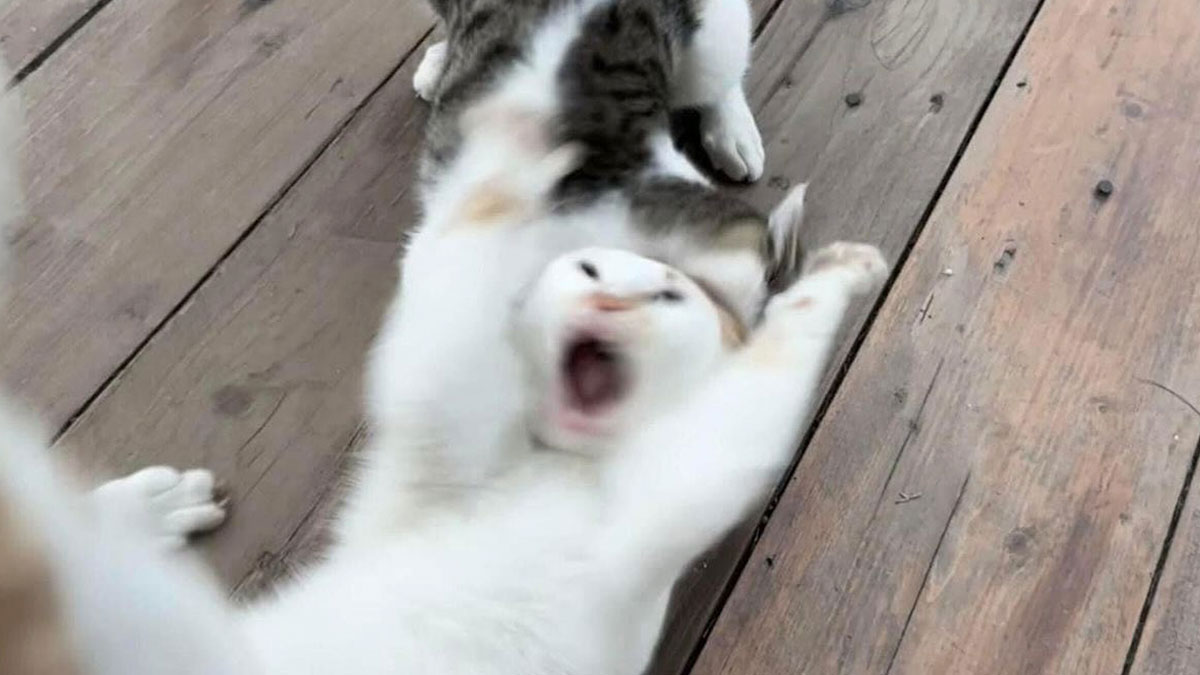
Fork joined soon afterward. Fork's professional history consisted mostly of approaching objects near edges and conducting immediate experiments regarding their relationship with gravity. The human called this quality assurance. Fork accepted the title because the title was attached to a desk containing three pens, a cable, and a glass that had been placed with criminal negligence near the perimeter.
Pixel required no recruitment. Pixel had already noticed the cursor. Nothing else in the room mattered anymore. The cursor moved. Pixel followed. It stopped. Pixel waited. It moved again. Pixel struck the screen with the confidence of a predator and the effectiveness of a pillow. After several unsuccessful attempts, Pixel concluded that the cursor was deliberately cheating. This became the foundation of the site's interaction design.
JPEG was asleep. The human decided that this demonstrated stability and assigned JPEG infrastructure. JPEG remained asleep. The appointment was considered accepted.
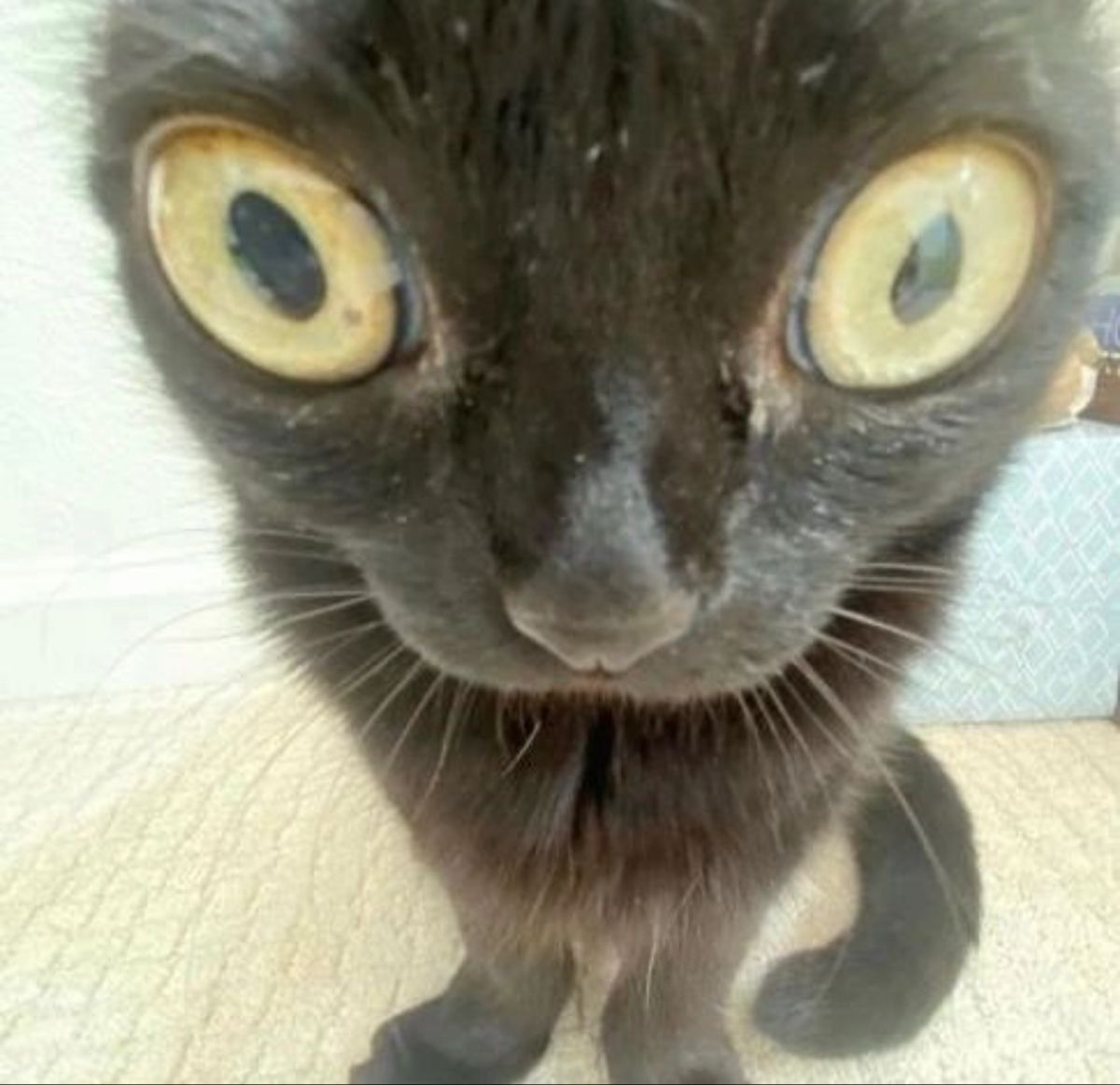
The first design meeting began without an agenda because the agenda document had been walked across. Miso inspected the old website from approximately four centimeters away from the screen. There were too many words. There were too many explanations. There were sections explaining sections that did not need to exist. Miso sat on the keyboard until several of them disappeared. The human protested. Miso looked at the human. The protest ended.
A rule emerged without anyone writing it down. If something could be simpler, the cats would remove it. If something could move, Pixel would hunt it. If something could fall, Fork would test it. If something produced heat, JPEG would occupy it. If something remained undecided, Miso would sit directly in front of it until the decision became irrelevant.
The human attempted to contribute a navigation bar. The cats studied it. It contained links to places already visible on the same page. Miso removed it. The human attempted to restore it. Miso removed it again. By the third attempt the human understood that democracy had not survived the transition of power.
The question of color was resolved quickly. The room was dark. The screen was dark. A bright green object on a dark background resembled the kind of thing a cat might immediately decide belonged to it. No further research was considered necessary. A design system was born from instinct, laziness, and the refusal to open a color picker twice.
Then Pixel discovered the red dot. Work stopped completely. The dot crossed the screen and Pixel followed. It escaped left, then right, then upward. Pixel's entire body became a mathematical instrument dedicated to predicting its next position. Miso pretended not to care for almost twelve seconds before joining. Fork attacked a point several centimeters away from the target but maintained that this was intentional. JPEG opened one eye and closed it again.
The red dot vanished. Pixel remained frozen, staring at the place where reality had failed. The human moved the cursor. Pixel looked at the cursor, then at the human, then back at the empty space. Something permanent changed in the relationship between them. The red dot was immediately promoted from experiment to essential feature.
While Pixel pursued light, Fork began testing the desk. A pen fell. Fork watched it disappear over the edge and listened for the impact. The result was satisfactory. A second pen followed. Then a small plastic adapter whose purpose nobody remembered until several hours later. Fork's methodology was simple, repeatable, and impossible to stop without physically relocating the entire quality assurance department.
The human moved important objects farther from the edge. Fork observed this adaptation with satisfaction. Training the human had not been part of the original project scope, but management accepted the additional responsibility.
JPEG eventually woke because the laptop had become warmer. JPEG stepped onto the keyboard, opened a browser shortcut nobody knew existed, inserted several characters into the stylesheet, and lay down across the function keys. The page changed. Strangely, part of it looked better. The human spent twenty minutes identifying which accidental modification had improved the layout. JPEG slept through the investigation and received credit anyway.
By the end of the first day the human had begun referring to the cats as assistants. This description was inaccurate. Assistants normally receive instructions. The cats received opportunities. Assistants support decisions. The cats prevented decisions they disliked by occupying the input devices required to implement them. Assistants can theoretically be dismissed. Nobody had discovered a procedure for dismissing Miso from a warm chair.
The next morning brought the first serious disagreement. The human wanted the website to look professional. Miso considered the proposal. Fork moved a pencil toward the edge. Pixel watched the cursor. JPEG began washing one paw. The proposal died without requiring a vote.
Instead, the cats constructed a place for themselves. Their photographs occupied more space than anything the human had built. This seemed correct. Miso became chief screen inspector. Fork retained responsibility for gravity. Pixel controlled keyboard occupancy despite spending most of the day interested in the mouse. JPEG took charge of sleep infrastructure, a department with excellent uptime and no measurable output.
The human looked at the cat section and admitted that it was the best part of the page. This was the last useful design observation the human would make for some time.
Visitors arrived. Some ignored the human's name and immediately found the cats. This pleased management. Others discovered the red dot and tried to catch it with the mouse. Pixel watched these attempts from beyond the screen with the cold recognition of one hunter observing another, less competent hunter. The dot escaped everyone. Its performance review was exceptional.
The website still contained empty space. The human saw a problem. JPEG saw real estate. The difference between human and feline design philosophy became impossible to ignore. Humans wanted every region to explain something. Cats understood that empty regions were useful for stretching, staring, waiting, and creating the suspicion that something might suddenly move.
A scratching surface appeared as an experiment. At first it was decorative. This offended the cats. A scratching surface that could not be scratched was merely an image of a promise. The human was instructed, through sustained keyboard obstruction, to correct the mistake.
The surface became responsive. Dragging across it left marks. Four grooves appeared together, following the direction of movement. The marks accumulated. The clean panel slowly became damaged. For the first time, the website improved by becoming visibly worse. The cats recognized this as progress.
Miso inspected the scratch marks and approved them by ignoring them. Fork attempted to test whether the physical monitor could also be scratched and was redirected before meaningful data could be collected.
At some point the human asked whether the website should include projects, statistics, achievements, timelines, technologies, and other conventional portfolio material. The cats listened carefully. Then Miso walked away. Pixel chased a reflection. Fork discovered a receipt. JPEG was already asleep. The human removed the idea from consideration.
This was when the website stopped behaving like a portfolio and started behaving like territory.
The top belonged to the human in name only. The giant letters remained because Miso had concluded that humans became calmer when their names were displayed prominently. Everything below operated under feline law. Links were pushed toward the bottom where they could not interrupt anything interesting. Explanations were shortened. Toys were rejected unless they felt like actual cat behavior. Talking cats were considered embarrassing and quietly eliminated.
The cats did not need dialogue. Their opinions were already visible in the architecture.
A moving light said Pixel had been there. Scratches said somebody had objected to an untouched surface. Missing navigation said Miso did not care where the visitor expected to go. The absence of unnecessary objects said JPEG had demanded room to sleep. The clean edges said Fork had already pushed everything else off.
The human slowly learned the system.
When the human proposed adding something, the first question became whether a cat would care. Most ideas failed immediately.
A box was suggested. The cats rejected the digital imitation. A real box had smell, texture, walls, corners, and the strategic advantage of being exactly one size smaller than the cat attempting to enter it. A rectangle on a screen possessed none of these qualities. The box disappeared.
A closed door joke appeared briefly. It explained itself too much. Cats did not explain closed doors. They simply demanded that closed doors become open, then stood in the doorway deciding whether the change had been worthwhile. The joke disappeared too.
The site became quieter as it became stranger.
Then came the incident report.
The human wanted lore. This was understandable. Every regime eventually writes its own history. The first version appeared only when requested. The human decided this was insufficient and ordered the history to begin automatically whenever anyone entered the site. The cats approved because forcing visitors to sit through an account of feline administrative success seemed entirely reasonable.
The first crawl was too small. The second was too slow. The third lasted a long time but moved with the urgency of JPEG approaching an empty food bowl after discovering it was not actually empty. Adjustments followed. The human complained about speed, then readability, then speed again. The cats observed that humans had invented browsers capable of rendering millions of operations per second and still could not decide how quickly words should move upward.
Miso took control of the problem conceptually. The story should move at a comfortable reading pace. If it needed to last longer, the solution was not to make every sentence crawl through wet concrete. The solution was to have more story.
So the archive expanded.
It recorded the morning Miso discovered that sitting directly between the human and the monitor caused work to stop instantly. This power required no software, no permissions, and no authentication. Miso began using it whenever meals appeared delayed by more than a personally determined interval.
It recorded Fork's campaign against cables. A cable hanging behind the desk moved slightly when touched. Therefore it might be alive. Fork investigated. The cable moved again. Investigation intensified. The human explained that it carried power to the monitor. Fork considered this claim unverified and continued.
It recorded Pixel's discovery of the loading spinner. The spinner rotated endlessly but could not be caught. Pixel watched it for nearly a minute, which in Pixel's attention economy represented a major long-term research commitment. When the page finished loading, the spinner disappeared. Pixel looked personally betrayed.
It recorded JPEG's relationship with compilation. Whenever the human built a large project, the laptop warmed. JPEG began appearing during builds with suspicious consistency. The human briefly believed JPEG understood software development. In truth JPEG understood heat transfer far better.
It recorded the arrival of a package. The expensive object inside was removed and placed carefully on the desk. The cardboard packaging was placed on the floor. Every cat immediately understood which part of the delivery had value.
Miso entered the box first and declared ownership by becoming impossible to remove. Pixel attempted to join despite the available volume suggesting this was mathematically unreasonable. Fork investigated whether the side wall could become an entrance if sufficient force were applied. JPEG waited until the conflict ended, entered the abandoned box, and slept for three hours.
It recorded the night a tiny sound occurred somewhere beyond the room. Four cats woke simultaneously. Their heads turned toward the same invisible point. The human heard nothing. This made the event worse. The cats moved through the darkness with absolute concentration and assembled in front of a blank section of wall.
They stared.
The human stared with them.
Nothing happened.
The investigation continued for forty minutes.
The wall was never cleared of suspicion.
It recorded the first time the human tried to close the laptop while Miso was nearby. Miso watched the screen descend and placed a paw between the halves. The human stopped. Neither participant moved. The negotiation contained no words but communicated every relevant fact. The laptop reopened.
This period became known unofficially as the Era of the Closed Laptop, although the laptop remained closed for less than twelve seconds.
It recorded Fork's most ambitious gravity test. A glass stood near the edge of the desk. Fork approached slowly, maintaining eye contact with the human. One paw touched the glass. The human said no. The paw remained. The human repeated no with greater conviction. Fork moved the glass approximately one centimeter.
The human moved the glass to another room.
Fork considered the experiment successful because the object had been displaced far beyond initial expectations.
It recorded the morning Pixel discovered a sunbeam on the wall. Unlike the red dot, the sunbeam could not be frightened into movement. Pixel attacked it anyway. The sunbeam remained. Pixel changed angle. The sunbeam remained. Pixel eventually sat inside it and accidentally discovered warmth. The research program changed departments.
It recorded the hour when all four cats slept at the same time.
The human noticed the silence cautiously. No paws crossed the keyboard. No body blocked the screen. No mysterious object fell. No one demanded access to a room they had just left. The human completed more work in that hour than during the previous afternoon.
Then Miso woke.
The productive period ended immediately.
It recorded the evolution of the food schedule. Initially the human believed meals occurred at fixed times. The cats introduced a more sophisticated system in which meals occurred at fixed times plus whenever any cat could plausibly convince the human that the previous meal had been forgotten.
Miso specialized in silent staring. Fork specialized in leading the human toward the bowl. Pixel specialized in sudden enthusiasm whenever the kitchen became relevant. JPEG specialized in appearing only after food had already been served, creating the impression that JPEG had not eaten and might require a separate portion.
The system produced occasional duplicate meals and was therefore judged highly successful.
It recorded the day the human attempted a video call while the cats were active. Miso crossed the camera. Pixel attacked something moving on the screen. Fork disconnected a cable through investigative enthusiasm. JPEG slept just outside the camera frame and therefore contributed the most professional performance.
The human apologized to the other participants. Management issued no statement.
It recorded a bug that appeared only when the human tried to demonstrate the website to someone else. The bug vanished when debugging tools opened. The human became frustrated. Miso sat nearby with the expression of someone who had predicted this exact failure and chosen not to mention it.
The bug was eventually fixed. Miso received no technical credit but accepted a treat.
It recorded the long dispute over the chair. The human purchased the chair. The human assembled the chair. The human placed the chair at the desk. Miso slept in the chair. Ownership transferred immediately.
The human attempted to move Miso and discovered a phenomenon known to cat owners but unexplained by conventional mechanics: a sleeping cat can increase its effective mass dramatically when relocation is attempted.
A second chair was introduced. Miso began alternating between them.
It recorded the paper bag incident. Pixel entered the bag. Fork attacked the bag because it moved. Pixel attacked Fork from inside the bag because the attack had been unexpected. Miso watched from a safe distance, perhaps calculating liability. JPEG sat on the bag after everyone left.
No lessons were learned.
It recorded the day the human cleaned the desk. Objects were organized. Cables were routed. Papers were stacked. The surface became open and orderly. The cats arrived and interpreted the new arrangement as an invitation.
Within minutes Miso occupied the center. Pixel relocated a small object. Fork discovered that the newly organized pens could still fall. JPEG selected the stack of papers because it was slightly taller than the desk and therefore objectively superior.
The human stopped cleaning.
It recorded the first deployment after the cats took control. The human announced that everything was ready. Miso blinked. Fork yawned. Pixel followed the cursor toward the deploy button. JPEG remained asleep. The human interpreted these signals as approval and pushed the update.
The deployment succeeded.
This was disastrous for formal governance because it suggested the review process worked.
The next deployment failed.
Miso was blamed briefly before the human remembered that Miso could not read the code. Miso appeared offended by the implication anyway.
The failure was fixed. The site returned. The cats retained authority.
Over time, the human became less of an owner and more of an operator. The repository still carried the human's account. The keyboard still responded to human hands when unoccupied. The domain, if anyone cared to discuss such paperwork, remained under human administration. But the decisions that shaped the site increasingly followed feline priorities.
Movement mattered more than explanation.
Texture mattered more than decoration.
Space mattered because space could be occupied.
Anything near an edge was temporary.
Anything warm was already claimed.
Anything closed should be opened.
Anything open should be inspected.
Anything moving should be chased.
Anything not moving might begin moving and therefore deserved surveillance.
The human began to understand why talking-cat gimmicks had felt wrong. The cats did not need speech bubbles to be characters. Their behavior was the character. A red dot fleeing the cursor communicated more than a paragraph of invented dialogue. A surface collecting claw marks communicated more than a fake email written in a cat's voice.
The best parts of the site were the parts that behaved like cats without announcing that they behaved like cats.
Miso approved this philosophy by sitting on the keyboard and preventing further edits for the evening.
Fork approved it by pushing an eraser onto the floor.
Pixel approved it by failing to catch the red dot again.
JPEG approved it by sleeping through the entire discussion.
Weeks passed, although the cats measured time differently. There was before food and after food. There was sunny window and dark window. There was human at desk and human mysteriously absent. There was the sound of a package arriving, the sound of a cupboard opening, the sound of a treat container moving by one millimeter from another room.
The website remained.
Visitors continued arriving and immediately encountered the history of how the human had been too lazy to make the website alone. Some stopped the report. This was permitted. The STOP button existed because even feline government understood that a captive audience eventually becomes an annoyed audience.
Others kept reading.
They learned that the delegation had never really ended.
Every revision followed the same ritual. The human proposed. The cats, whether physically present or represented by the rules they had accidentally established, judged. Anything too corporate disappeared. Anything too explanatory shrank. Anything that felt like a toy for humans rather than a behavior for cats was removed.
The site became a record not of projects completed but of taste discovered through rejection.
The human had started by asking what should be added.
The cats taught the better question: what can be removed without losing the thing that makes this worth looking at?
This was an unexpectedly useful lesson from four animals whose primary professional activities included sleeping, staring at walls, and requesting food immediately after receiving food.
The human never admitted this lesson publicly.
Management kept records.
One evening, long after the first unfinished version had disappeared, the human opened the site and watched the red dot move. It escaped the cursor exactly as designed. The scratching surface carried the marks of previous visitors. The cats occupied their section with the confidence of executives who had survived every attempted reorganization.
The page did not explain everything.
It did not need to.
The human considered adding something.
Miso, somewhere in the logic of the design, stared.
The human closed the editor.
For several minutes, nothing changed.
This was perhaps the most successful update of the entire project.
Of course, peace never lasted.
There would be another idea. Another request. Another small thing that looked harmless until it occupied half the page. Another experiment that would survive for ten minutes or ten revisions. Another moment when the human would look at the result and realize the cats had been right to demand less.
Fork would continue testing edges.
Pixel would continue hunting impossible prey.
JPEG would continue treating heat as infrastructure.
Miso would continue exercising veto power through presence alone.
And the human would continue doing the actual typing while maintaining the increasingly implausible claim that this constituted ownership.
The arrangement suited everyone.
The cats received a website centered around their priorities without learning HTML.
The human received a website without having to pretend that a conventional portfolio had ever been the goal.
Visitors received a red dot, a scratchable surface, four cats, and an unnecessarily extensive historical document explaining why any of this existed.
No mission statement was required.
No corporate values were drafted.
No newsletter appeared.
No one asked for an email address.
Nothing requested permission to send notifications.
There was simply the machine, the page, the moving light, the marks left behind, and the quiet certainty that the human was not actually in charge.
If the story has a lesson, the cats have declined to provide it.
Lessons sound like work.
The archive therefore ends where feline projects usually end: not with completion, but with attention moving somewhere else.
Perhaps a sound came from the hallway.
Perhaps sunlight reached a different part of the floor.
Perhaps somebody opened a cupboard.
Perhaps the cursor moved.
Whatever happened, four heads turned.
The website was left running.
The human remained at the keyboard.
For the moment.
And somewhere just beyond the edge of the desk, Fork noticed that somebody had carelessly left a pen within reach.
THE SITE REMAINS UNDER FELINE CONTROL.